
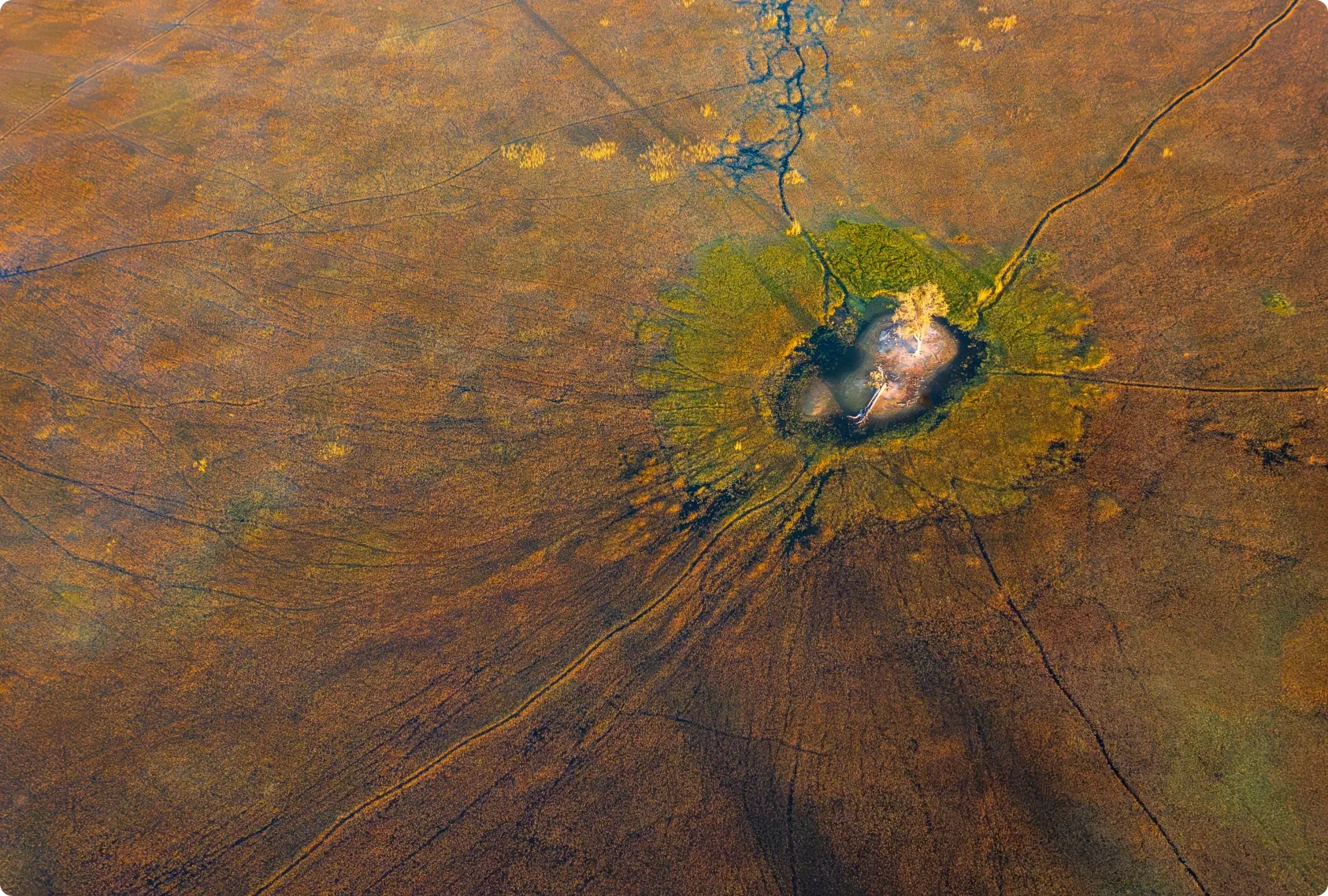
Set in the heart of Botswana’s Kalahari Desert, the Okavango is a vast inland oasis.
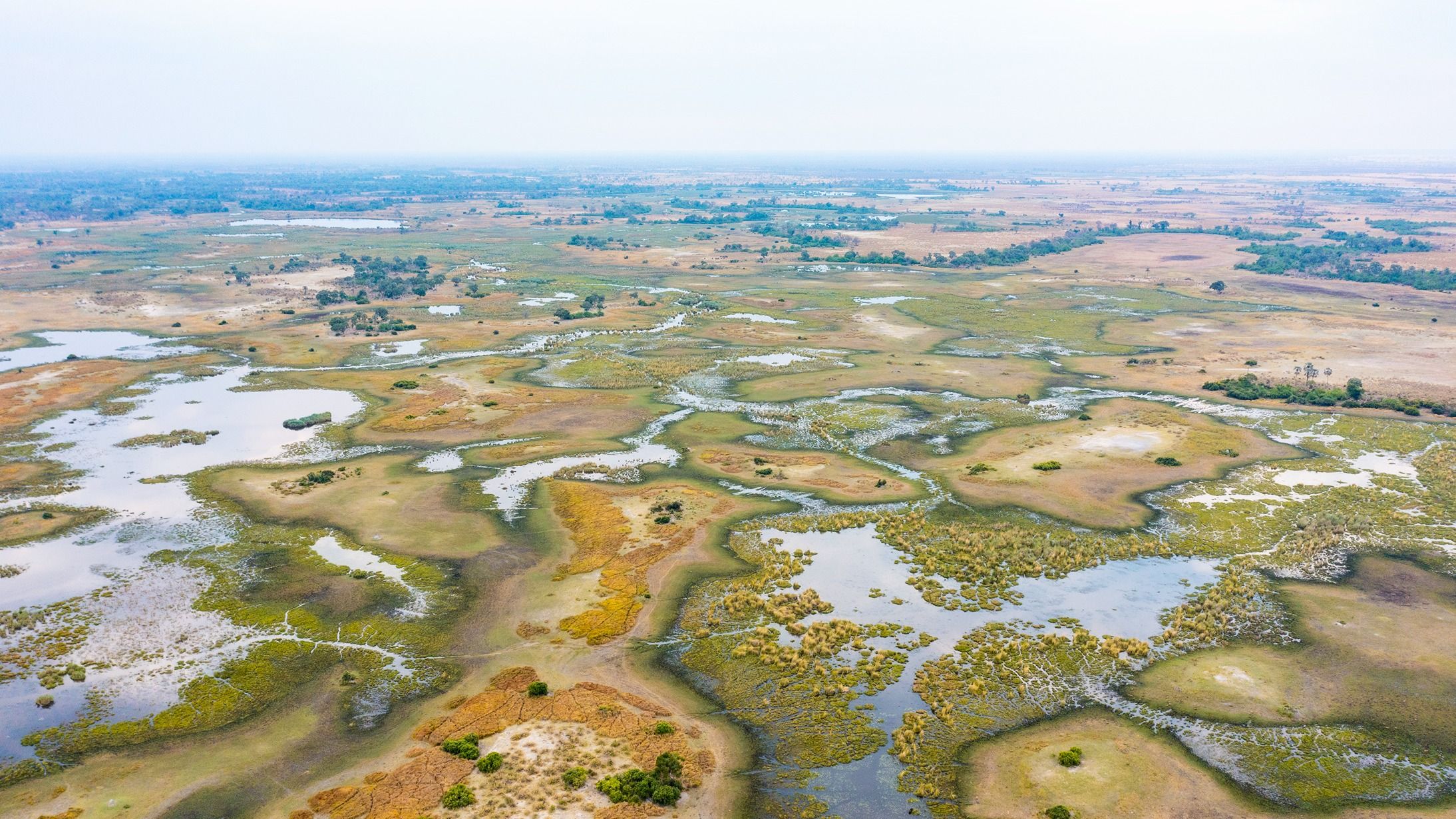
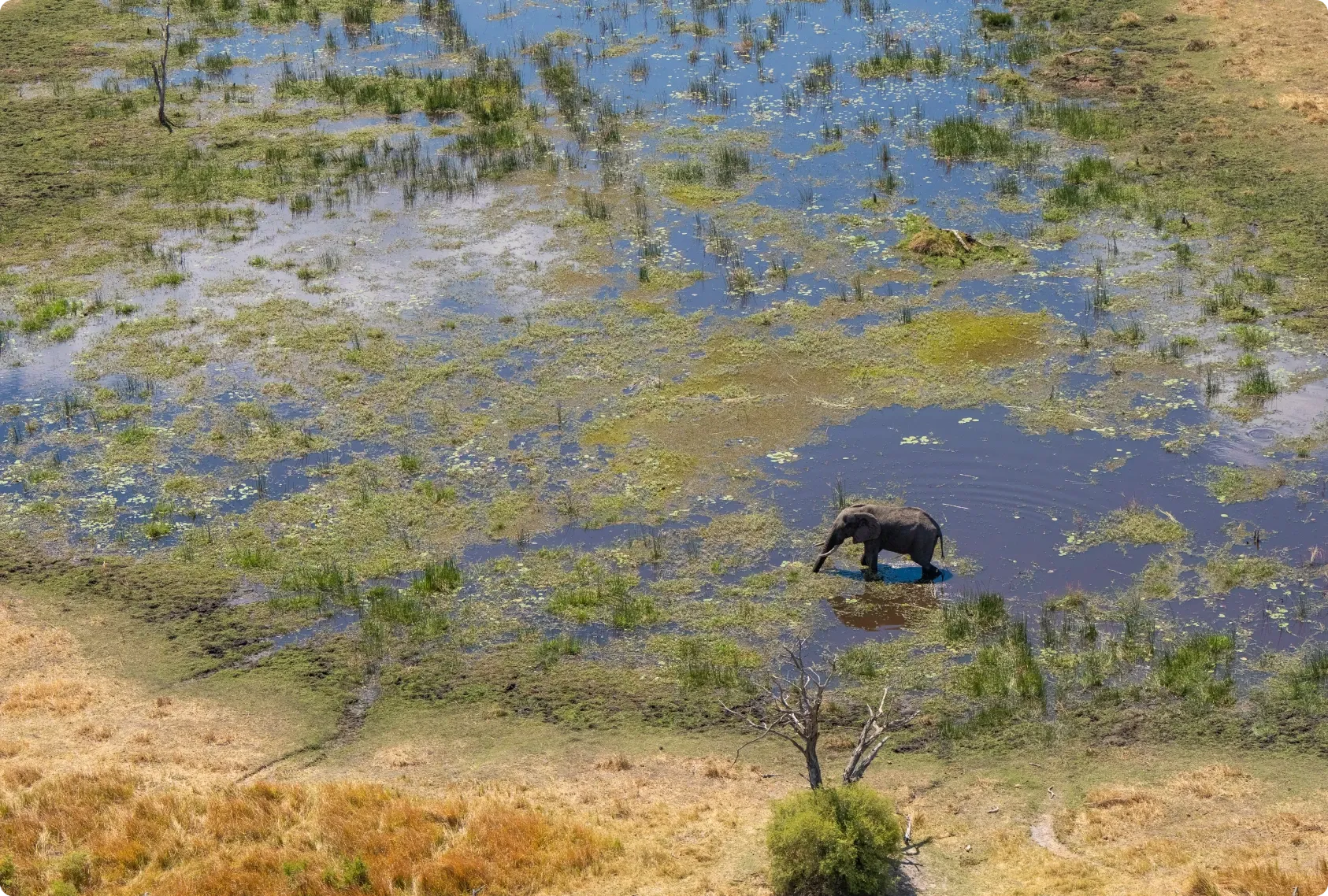
Clear water fans out into a labyrinth of channels, lagoons, and islands. Elephants wade past palm-dotted sandbanks, fish eagles call from high branches, and the landscape seems to shift and breathe with the seasons.
The wonder of the Delta is not only in its beauty, but in its origins—a rare combination of geology, climate, and time that has created a living sanctuary in one of the driest corners of Africa.
A Geographic Rarity
The story of the Delta begins far to the north in the highlands of Angola, where seasonal rains feed the Cubango and Cuito rivers. These tributaries merge to form the Okavango River, which flows southeast through Namibia before spilling into Botswana. Unlike most rivers, it never reaches the sea. Instead, it fans out into a shallow basin—formed by tectonic activity—where the waters slow, spread, and sink into the sands of the Kalahari.
With less than two metres of elevation change across its widest stretch, the water moves slowly, creating a complex web of waterways and islands. Over time, sediment, plant growth, and even the work of hippos and termites have shaped this watery wilderness into the ever-changing mosaic we know today.
Shaped by the Earth’s Shifts
The basin that cradles the Delta owes its existence to ancient tectonic forces. Movements along geological fault lines created a trough in the land, trapping the Okavango’s waters instead of letting them escape. This slow shifting continues today—scientists estimate that Botswana experiences about one minor tremor every day. But thanks to the thick sand cover, these movements pass unnoticed, creating a stable yet ever-evolving landscape.
The Delta’s origins may also be linked to the remnants of Lake Makgadikgadi, a prehistoric super-lake that once covered much of the Kalahari. Over tens of thousands of years, shifting earth and changing climates transformed that vast body of water into the intricate wetland system we see today.
A Flood in the Dry Season
One of the Delta’s most surprising qualities is its timing. The floods arrive not during Botswana’s rainy season, but in its dry winter months. Rain falls in Angola between December January and MarchFebruary, but it takes months for the water to travel the 1,000 km journey south. By the time it reaches Botswana, the surrounding land is parched, and the Delta becomes a lifeline.
From May to August, water spills over the floodplains, tripling the Delta’s size. Wildlife gathers in staggering numbers—herds of red lechwe grazing knee-deep in the shallows, elephants drifting through clear lagoons, and predators following the abundance. For those who witness it, the reversal of expectation—a flood in the dry season—feels almost magical.
A Sanctuary for Life
The Okavango Delta is one of Africa’s greatest wildlife havens. It harbours the Big Five—lion, leopard, elephant, buffalo, and rhino—alongside wild dog, cheetah, giraffe, hippo, and countless antelope. More than 400 bird species fill the skies, from jewel-bright malachite kingfishers to the the African fish eagle with its unmistakable cry.